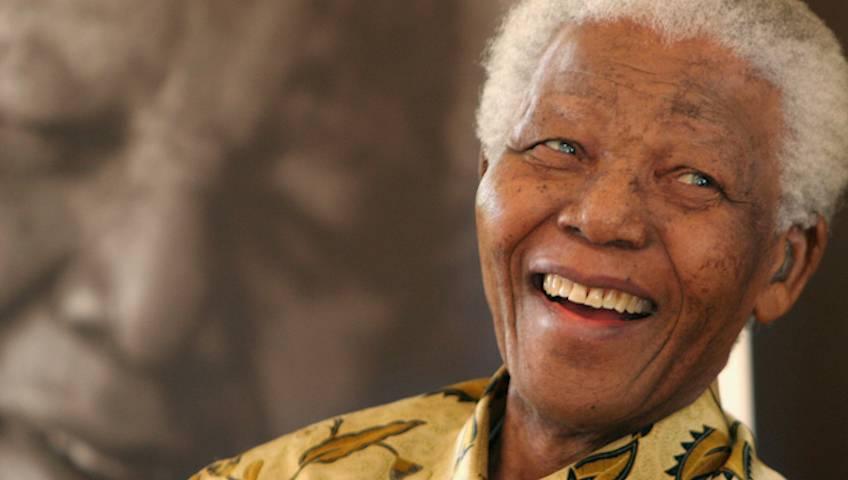
The funeral will be next Saturday and it will be prestigious. Every living U.S. president is expected to attend. Prime Minister Harper and Chretien will be there. Oprah is planning to attend with some of Hollywood’s elite. Royalty like Prince Charles and the Duke & Duchess of Cambridge are also expected to make the trip to South Africa.
Yesterday the president of South Africa announced the news that Nelson Mandela has died at the age of 95. Having suffered from failing health over the past year, Mandela was readmitted to a Pretoria hospital in early June for a recurring lung infection that at one point developed into pneumonia. His lungs had been weakened as a result of his contracting tuberculosis during the 27 years he spent behind bars. On Sept. 1, he was released from the hospital but remained “critical and (at times) unstable,” according to a statement from the president. His treatment continued at home until he passed away yesterday, peacefully in his sleep. Nelson Mandela spent 27 years in prison for his political activism before leading South Africa’s transition from white-minority racist rule and ending apartheid.
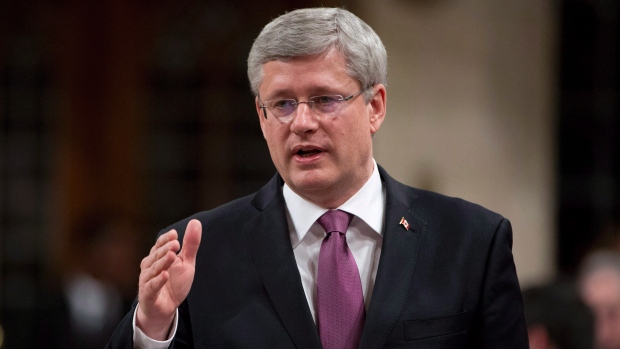
Prime Minister Harper calls the former South African president one of the world’s “great moral leaders and statesmen.” U.S. President Barack Obama says Mandela was one of world’s the “most influential, courageous, and profoundly good human beings.” South Africa has begun 10 days of official mourning.
What You Need To Know about Nelson Mandela:
-Nelson Rolihlahla Mandela was a South African anti-apartheid revolutionary and politician who served as President of South Africa from 1994 to 1999. He was the first black South African to hold the office, and the first elected in a fully representative, multiracial election.
-His government focused on dismantling the legacy of apartheid through tackling institutionalized racism, poverty and inequality, and fostering racial reconciliation.
-Politically an African nationalist and democratic socialist, he served as the President of the African National Congress (ANC) from 1991 to 1997. Internationally, Mandela was the Secretary General of the Non-Aligned Movement from 1998 to 1999.
-Mandela attended Fort Hare University and the University of Witwatersrand, where he studied law.
-Living in Johannesburg, he became involved in anti-colonial politics, joining the ANC and becoming a founding member of its Youth League. After the Afrikaner nationalists of the National Party came to power in 1948 and began implementing the policy of apartheid, he rose to prominence in the ANC’s 1952 Defiance Campaign, was elected President of the Transvaal ANC Branch and oversaw the 1955 Congress of the People.
-Working as a lawyer, he was repeatedly arrested for seditious activities and, with the ANC leadership, was prosecuted in the Treason Trial from 1956 to 1961 but was found not guilty. Although initially committed to non-violent protest, in association with the South African Communist Party he co-founded the militant Umkhonto we Sizwe (MK) in 1961, leading a bombing campaign against government targets. In 1962 he was arrested, convicted of sabotage and conspiracy to overthrow the government, and sentenced to life imprisonment in the Rivonia Trial.
-Mandela served 27 years in prison, first on Robben Island, and later in Pollsmoor Prison and Victor Verster Prison. An international campaign lobbied for his release, which was granted in 1990 amid escalating civil strife.
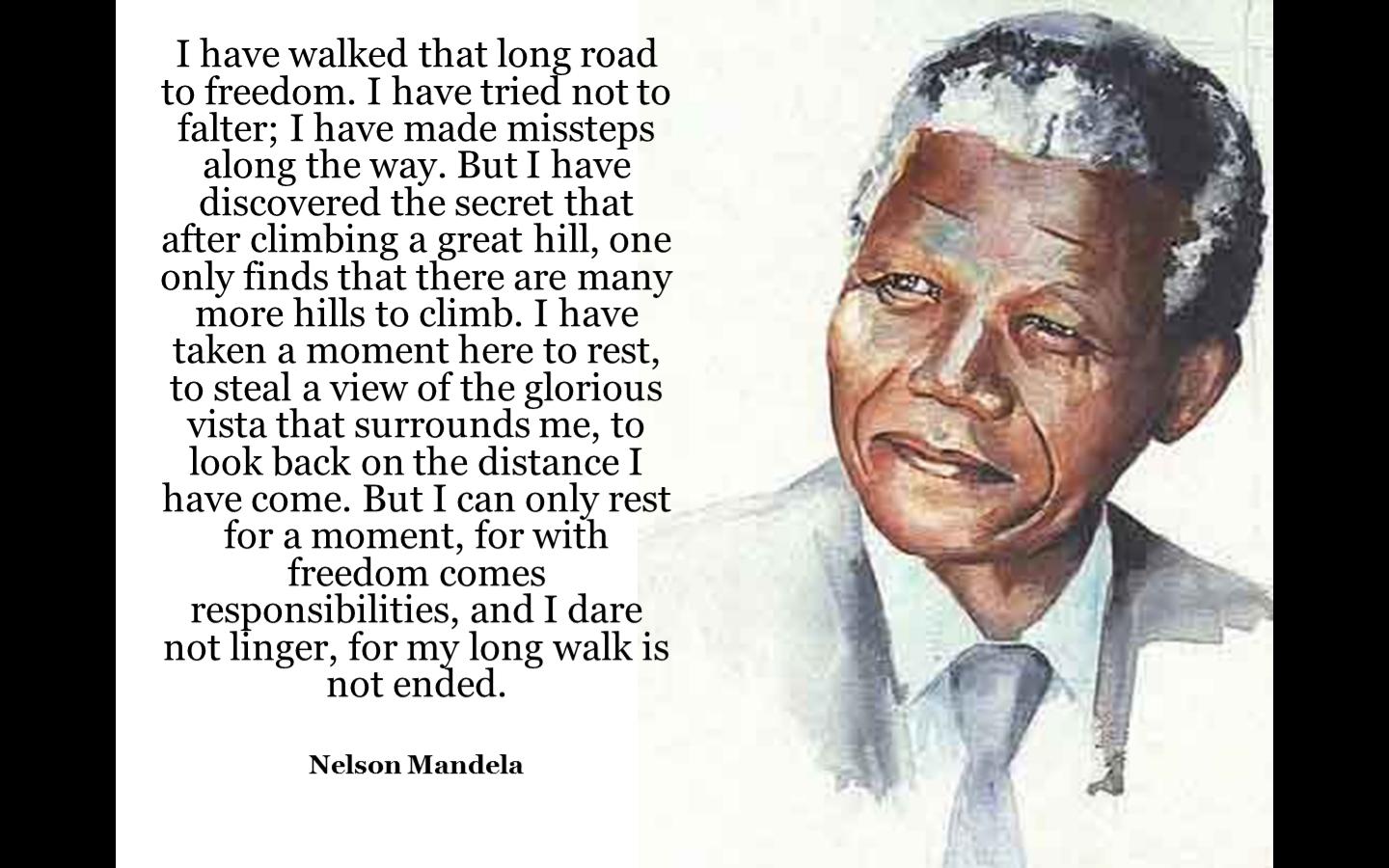
Here are some of our favourite quotes from Nelson Mandela
“When a man has done what he considers to be his duty to his people and his country, he can rest in peace.”
“It always seems impossible until it’s done.”
“Education is the most powerful weapon which you can use to change the world.”
“I learned that courage was not the absence of fear, but the triumph over it. The brave man is not he who does not feel afraid, but he who conquers that fear.”
“There is no passion to be found playing small – in settling for a life that is less than the one you are capable of living.”
“For to be free is not merely to cast off one’s chains, but to live in a way that respects and enhances the freedom of others.”
“Any man or institution that tries to rob me of my dignity will lose.”
“Unlike some politicians, I can admit to a mistake.”
“There are times when a leader must move out ahead of the flock, go off in a new direction, confident that he is leading his people the right way.”
“Our human compassion binds us the one to the other – not in pity or patronizingly, but as human beings who have learnt how to turn our common suffering into hope for the future.”
“There is no such thing as part freedom.”
“I can’t pretend that I’m brave and that I can beat the whole world.”


